Our physicians have completed specialized fellowship training in endoscopic spine surgery. Endoscopic surgery uses a camera about the size of a pencil to reach the same herniated disc or pinched nerve that open surgery reaches, but without cutting through the surrounding muscle to get there.
Learn more about the techniqueLess disruption to the surrounding muscle and ligaments than traditional open surgery.
Most cases can be done with a local numbing injection or an epidural, plus light sedation, instead of full general anesthesia.
Many patients go home the same day, with a recovery plan built around real life.
In clinical studies that followed patients for two years, people who had endoscopic surgery ended up with results just as good as people who had open surgery — they just got there with fewer complications, less blood loss, and a quicker return to work.
Patients had complications about half as often with endoscopic surgery — 5.5%, compared to 10.4% with open surgery.1
A review of more than 2,500 patients found significantly less blood loss during endoscopic surgery than open surgery.2
A 2026 meta-analysis of 17 clinical trials (2,238 patients) found patients returned to work about 22 days sooner, on average, after endoscopic surgery than after open microdiscectomy.3
1. Yang CC, Chen CM, Lin MHC, et al. Complications of Full-Endoscopic Lumbar Discectomy versus Open Lumbar Microdiscectomy: A Systematic Review and Meta-Analysis. World Neurosurgery. 2022;168:333–348.
2. Barber SM, Nakhla J, Konakondla S, et al. Outcomes of endoscopic discectomy compared with open microdiscectomy and tubular microdiscectomy for lumbar disc herniations: a meta-analysis. Journal of Neurosurgery: Spine. 2019;31(6):802–815.
3. Patel S, Nischal SA, Kale KM, et al. Full Endoscopic versus Microscopic Lumbar Discectomy for Lumbar Disc Herniation. Spine. 2026. doi:10.1097/BRS.0000000000005753.
Findings vary across individual studies and surgical technique; outcomes for any individual patient depend on anatomy, diagnosis, and overall health, and are discussed during consultation.
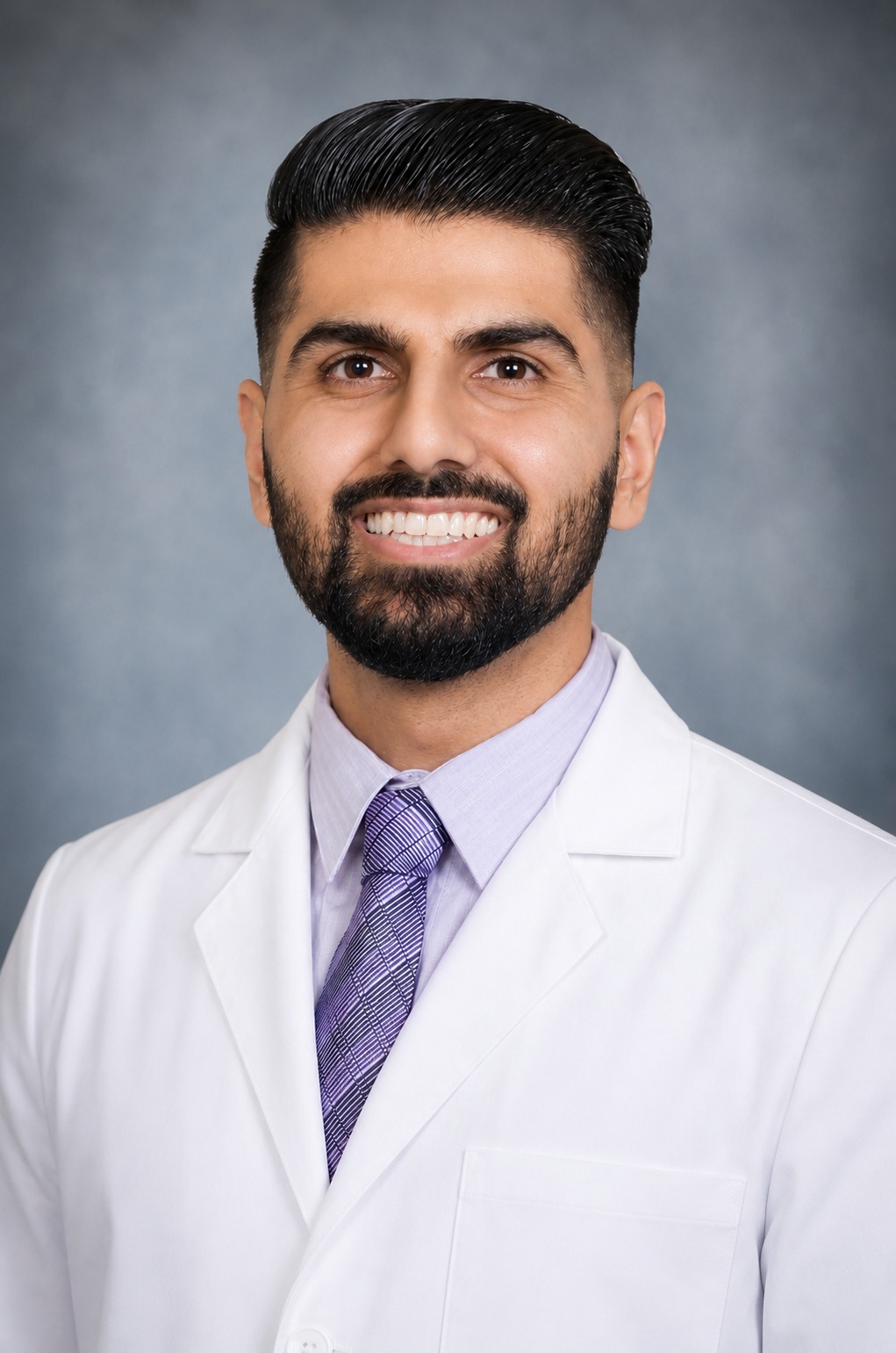
MD · Fellowship-Trained, Endoscopic Spine Surgery
Founder of EMISSC — a fellowship-trained endoscopic spine surgeon with a background in interventional pain management, combining the long-term relationships of pain medicine with the procedural precision of minimally invasive surgery. The goal: help patients get back to what pain has interrupted, through the least invasive path that gets them there.
Meet Our TeamAfter completing his interventional pain management fellowship, he trained at the only dedicated 12-month endoscopic spine surgery fellowship in the country at the University of Florida. During his anesthesiology residency there, Dr. Bengali received the Chair's Award for Best Resident and the Michael E. Mahla Exceptional Resident of the Year award, voted on by his co-residents, along with faculty-nominated honors for Outstanding Senior Resident, Outstanding Junior Resident, and Outstanding Achievement in Pain Medicine, plus the Outstanding Resident Educator Award, given annually by the Society of Teaching Scholars.
Fill out our intake form, and our team will reach out to you to gather more information.
Our team reviews your imaging to see whether an endoscopic approach fits your anatomy, then meets with you in person or by telehealth to review findings, options, and what to expect — plainly.
Most endoscopic cases are outpatient, done with local or epidural anesthesia and light sedation instead of general anesthesia.